Thin Steel, Big Thanksgiving: A Taiwan Wok Spatula vs. Two U.S. Utensils

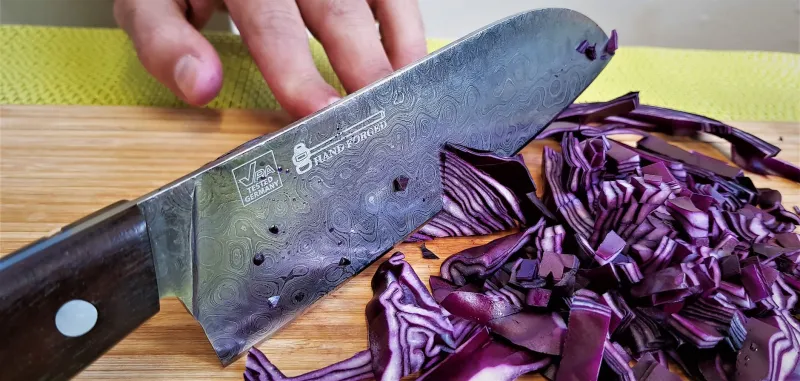
Photo: Line Omey, CC BY-SA 3.0, via Wikimedia Commons
My utensil drawer had become a museum of almost-right tools. There was the $25 U.S. turner with a blade so stout it shoved food instead of sliding under it. There was the silicone spatula that was great for eggs and useless in a hot wok. And there was a $9 stainless-steel wok spatula from a Taiwan hardware seller that I bought mostly because shipping was cheap and the photos looked like they were taken on an actual shop counter.
I did not expect it to clear space. But after a Thanksgiving-sized stir-fry in November 2026, that thin steel blade did what the other two could not: it made itself the default. This is not a love letter to a gadget. It is a drawer audit.
The contenders and the test setup
The Taiwan spatula was the kind of tool sold in hardware stores rather than kitchen boutiques: stainless steel, a plain welded handle, no silicone grip, no brand story on the packaging. It measured about 12 inches long and weighed less than 7 ounces. The blade was thin at the edge, with a slight upward curve on one side and a flat scraping edge on the other. It looked inexpensive in the way a good bench scraper looks inexpensive.
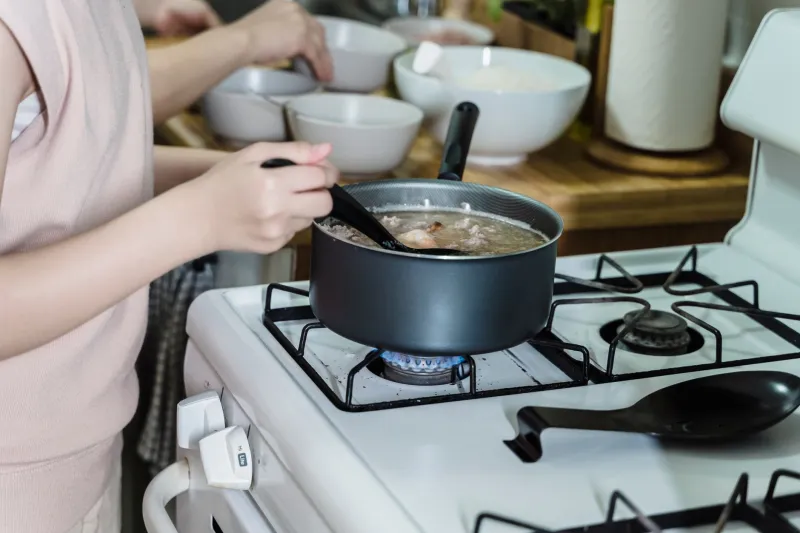
The U.S. turner was a $25 model from a mainstream kitchen brand. It had a wide, stiff blade, a riveted handle, and a reassuring heft. The silicone spatula was the flexible kind with a nylon core, the one most of us already own. I used all three on the same 14-inch carbon steel wok over a gas burner, cooking a 4-pound pile of green beans, sliced onions, and mushrooms in two batches. That is not a restaurant-level stir-fry, but it is close to what a home cook faces when the holiday table needs a vegetable and the stove is already crowded.
Blade thickness: the part your wrist notices
The first difference was not cosmetic. The Taiwan spatula's blade was thin enough to slide under a mound of green beans without launching them across the stovetop. A caliper reading showed roughly 1.2 mm at the spine tapering to about 0.6 mm at the working edge. The U.S. turner was closer to 1.8 mm at the spine with a blunt leading edge. That extra material makes it a fine burger flipper and a poor wok tool. It pushed food ahead of itself like a tiny snowplow.
The silicone spatula had the opposite problem. It flexed so much that it left a film of oil and soy sauce behind, and it could not scrape the curved bottom of the wok with any authority. It was gentle, which is useful for nonstick pans and scrambled eggs, but it was not built for high heat and a pile of vegetables.
The Taiwan spatula did not feel magical. It felt correct. The thin edge found the curve of the wok, the flat side scraped the bottom, and the slight curve on the other side kept food moving. After two batches, the blade had a few faint scratches and no bend. That is the right outcome for a $9 tool.
Handle balance and the Thanksgiving stir-fry test
A wok spatula spends a lot of time in the hand, so balance matters more than a spec sheet suggests. The Taiwan spatula's balance point sat about an inch behind the blade weld. The U.S. turner was blade-heavy; after ten minutes of tossing green beans, my forearm was doing extra work to keep the tip from diving. The silicone spatula was handle-heavy and felt like a wet paintbrush, which is fine for folding batter and annoying for stir-frying.
The Thanksgiving test was simple: could I keep a crowded wok moving without burning the edges of the vegetables or flinging them onto the stove? The Taiwan spatula won because it let me get under the food, lift, and turn without scraping the seasoning off the carbon steel. The U.S. turner worked as a shovel but made a loud, gritty sound against the wok. The silicone spatula was quiet and useless. I ended up using the Taiwan spatula for the entire second batch and leaving the other two on the counter.
How to spot a real MIT hardware-store find
Taiwan-made kitchen tools are not hard to find online, but the category has a rebadge problem. The same generic spatula can appear under six brand names with the same factory photos. A real hardware-store find usually looks less polished and more specific.
Start with the listing details. A seller who actually handles Taiwan hardware will often list dimensions in millimeters, weight in grams, and the material grade. Look for a photo of the stamp on the blade or handle, not just a mockup that says MIT in the title. The MIT mark, which stands for Made in Taiwan, should be on the tool itself if the seller is making a point of it. Check whether the seller has a physical address in Taiwan and whether the photos show a store shelf, a workbench, or a pile of stock rather than a single white-background hero image.
Reviews help, but read them for specifics. A review that mentions restaurant prep, a warped blade, or a handle that loosened after a month is more useful than five lines of praise. Be wary of listings that use the same photos as a dozen other sellers, promise 'high-quality stainless steel' without saying which steel, or price a supposedly professional tool at $3 with free international shipping. That is not a bargain. That is a rebadge with a markup on the shipping.
Sizes, shipping, and the rebadge problem
For U.S. buyers, the sweet spot is an 11- to 12-inch spatula that weighs under 8 ounces. That size fits a home wok and a large skillet, and it usually ships in a padded envelope or small tracked packet for a reasonable rate. Longer 14-inch models with wooden handles are more comfortable for restaurant-style cooking, but they can push a parcel into a higher shipping tier. If you are buying one tool, the shorter stainless version is the safer bet. If you are buying two, bundle them; the per-item shipping cost drops fast.
The rebadge problem is real. I have seen the same thin-blade spatula listed as a 'premium wok turner,' a 'professional chef spatula,' and a 'Taiwan kitchen tool' with wildly different prices. The clues are usually in the photos: identical blade shape, identical weld, identical handle curve, different logos. A real hardware-store listing tends to show the tool next to a ruler or on a counter with other utensils. It does not need a lifestyle photo of someone tossing vegetables in slow motion.
What I kept and what I retired
The $9 Taiwan spatula did not make me a wok evangelist. It made me ruthless about drawer space. The $25 U.S. turner moved to the camping box, where its stiff blade is genuinely useful for burgers and foil-packet dinners. The silicone spatula went into the baking drawer, where its flexibility is an asset. The Taiwan spatula stayed in the everyday crock.
That is the honest result of a Thanksgiving-sized stir-fry test. The expensive tool was not bad; it was built for a different job. The cheap tool was not magical; it was thin, balanced, and specific. For a U.S. kitchen that already has too many utensils, that specificity is worth more than a brand name. If you buy one, check the stamp, check the weight, and ignore the listings that look like they were generated by a spreadsheet. The good ones usually look a little ordinary. That is how you know they came from a hardware store.