Oolong Without the Guesswork: What a $12 Bag and a $40 Bag Actually Pour
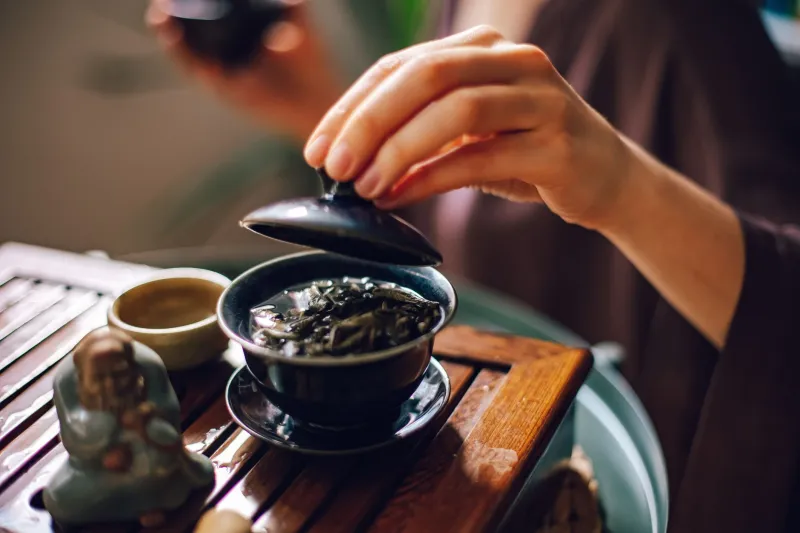
Most Americans meet Taiwanese tea at the bottom of a plastic cup — chewy pearls, a snow cap of foam, and enough sugar to blur whatever leaf is hiding underneath. That leaf is usually the cheapest, darkest roast in the shop. Which is fine. But it means the oolong sitting on shelves back home can feel like a riddle: three bags, three prices, no obvious reason one costs triple the others.
Here's the plain-English version.
Three families, one plant
Every Taiwan oolong comes from the same species. What changes is how far the leaf is allowed to oxidize — think of it as the tea version of a banana browning — and how much heat it meets afterward.
Pouchong (baozhong). Barely oxidized, roughly 8–15%, and usually unroasted. The leaves are long and twisted rather than rolled into balls. In the cup it's green-gold, floral, a little creamy, with the snap of a just-picked pear. It is the most forgiving oolong on earth — you can brew it badly and still get something you'd happily drink.
Dong Ding. Medium oxidation, 20–30%, then roasted over charcoal or electric heat. The leaf is rolled into tight balls. The flavor runs toward toasted nuts, caramel, a wisp of woodsmoke, sometimes dried fruit. Roasting is a craft, and in Taiwan good roasters get talked about the way Americans talk about pitmasters.
High-mountain (gaoshan). Grown above roughly 1,000 meters in places like Alishan, Shanlinxi, Lishan, and Dayuling. Light oxidation, minimal roast, ball-rolled. The logic is simple: slower growth at altitude means thicker leaves, more amino acids, less bitterness. The flavor is butter, orchid, sugarcane, and a finish that keeps going after you swallow.
The $12 bag versus the $40 bag
Same shelf, same category label. Here's what actually separates them.
Leaf size and consistency. Pour both out on a plate. The budget bag is often a blend of farms and seasons, with broken pieces, stray stems, and wildly uneven ball sizes. Uneven leaf brews unevenly — part of it turns bitter while the rest is still waking up. The pricier bag is usually single-origin and single-season, with uniform balls that open together.
Steep count. This is the number that decides whether the expensive bag is actually expensive. A $12 bag of 150 grams typically gives you three, maybe four solid infusions before it collapses into hot water with a memory. A well-made high-mountain oolong at $40 will usually hold six to eight. Divide price by cups and the gap narrows fast — sometimes to almost nothing.
Flavor clarity. Cheap oolong plays one note, loudly. Good oolong has a wet-leaf smell that shifts between steeps, a texture in the middle of your mouth, and a sweet aftertaste — hui gan — that shows up a few seconds after you swallow. That delayed sweetness is the single most reliable sign you're not drinking scented floor sweepings.
Freshness. Taiwan tea is seasonal. Spring harvest lands around April and May, winter harvest around October and November. A bag printed with a harvest date is worth more than a bag printed with a pretty mountain drawing. No date? Assume the tea is older than you'd like.
The brewing cheat sheet
You don't need a gongfu setup, though it's cheap and genuinely fun. A mug and a basket strainer will do.
- Leaf: 5 grams per 150 ml — a heaping tablespoon of ball-rolled tea, or about two tablespoons of pouchong.
- Water: 195–205°F for ball-rolled oolong, 185–195°F for pouchong. No thermometer? Boil, then wait two minutes.
- First pour: 40 seconds, then dump it. Yes, really. Most ball-rolled oolong benefits from a rinse, especially after a long warehouse stay.
- After that: add 10–15 seconds each round, and reheat your water. Lukewarm water is how good tea dies.
- Vessel: anything that holds heat. Ceramic beats glass; glass beats paper.
- Don't hit high-mountain tea with a rolling boil and then blame the leaf for being bitter. That's a technique problem.
Which upgrades are worth paying for
Worth it:
- A harvest date and a farm name. Real information costs money, and it signals a producer who expects you to taste the difference.
- Roast quality on Dong Ding. Skilled roasting is labor, and it's the difference between caramel and a charcoal briquette.
- Elevation, if you brew often. The steep-count math pays you back within a month.
Not worth it:
- Decorative tins. You're buying metal.
- "Competition grade" stickers that never name the competition.
- Gift boxes with a silk lining and 100 grams of tea inside.
- Anything that advertises a mountain but won't commit to a season.
Buying from the US
Dried, processed tea is one of the easier things to import. It's shelf-stable and rarely a headache in personal quantities, though rules and duty treatment can shift, so check current CBP guidance before a big order. The real cost is weight. A 150-gram pouch is light; a 600-gram bag is not, and air shipping out of Taipei is priced by the kilo. If you're ordering one thing to try, buy two small bags instead of one large one — same shipping bill, twice the education.
One last note. The jump from $12 to $40 is real. The jump from $40 to $120 mostly buys scarcity, not a better Tuesday morning. Start in the middle and let your palate tell you when it's ready to spend more.