Black Friday, Taipei Time: Which Taiwan Shops Really Cut Prices and Which Just Move the Decimal

Thanksgiving plate in one hand, phone in the other. That's the modern American ritual, and for anyone who buys from Taiwan, it now starts a day early — Taipei runs 13 hours ahead of the East Coast, so a shop's Friday morning sale goes live around 8 p.m. Thursday your time. You will be mid-pie.
The question isn't whether Taiwan stores will slap a Black Friday banner on the homepage. They all will. The question is which ones are actually discounting and which are running a disappearing-decimal trick.
Why a Taipei sale isn't a Best Buy doorbuster
Most Taiwan shops are small operations — a family tea farm, a two-person ceramics studio, a snack brand that sells through one warehouse. They don't have the margin to sell at a loss for traffic. What they do have is inventory they'd rather not store through Lunar New Year. That's the discount you're hunting: overstock, end-of-season, short-dated, second-quality. Not doorbusters.
Which means the sales that are real tend to look boring, and the ones that look exciting tend to be fake.
Where the discounts are genuine
Studio ceramics. This is the best category, full stop. Potters and small kilns accumulate seconds — pieces with a glaze run, a slightly warped rim, a thumbprint that fired in. Shops clear them in November, often 20–40% off, and the "flaw" is usually invisible unless you're holding it to the light. Look for listings labeled B-grade, second, or imperfect.
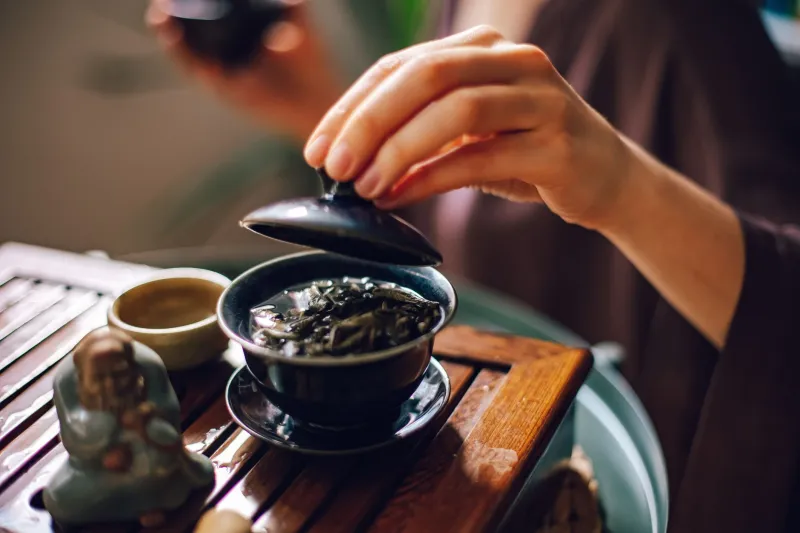
Tea. Late November lands right after the winter harvest, and shops want to move the previous spring's stock before the new crop takes shelf space. Harvest-dated lots at 15–30% off are common and legitimate. The discount is real because the tea is real — it's just a season older, which for roasted oolong is often an improvement anyway.
Pantry snacks. Genuine markdowns here are expiry-driven. Pineapple cakes, nougat, and nut brittles with three or four months left get cleared aggressively. That's fine if you're eating them in December. It's not fine if you're buying gifts for February — check the date code, not the badge.
Stationery. Bundle pricing is real — buy four notebooks, get the fifth free, that sort of thing. What's not real is the discount on Japanese imports, which are priced at a fixed markup all year and simply get a red tag stapled on.
Where you're being played
Fictional original prices. Plenty of Taiwan shops list a "was" price that was never actually charged. Before you buy, check the same product page in early November — or just check whether the same item is listed at the regular price on the brand's own site. If the crossed-out number doesn't appear anywhere else, it's decoration.
Phone cases, cables, and gadget accessories. This is the classic inflated-MSRP category. A case "marked down" from $49 to $19 was always $19.
Gift sets. A tin, a ribbon, and a cardboard sleeve can add 60% to the price of the tea inside. Sets almost never get real discounts because the packaging is the product.
Countdown timers that reset when you reload. Self-explanatory. Close the tab.
Free shipping thresholds set just above your cart. A $20 gap you can't fill without adding something you didn't want. Do the math on paying the shipping instead.
Shipping and customs, honestly
- Air parcel / EMS: typically 7–14 days to the US, roughly $25–45 for a 1–2 kg box. This is the sane middle option.
- Express courier: 3–5 days, $40–70 and up. Worth it only for something fragile you're gifting.
- Sea freight: four to six weeks, cheap per kilo, completely useless for Christmas.
Cutoffs that actually work. For a December 24 arrival, get the order out the door by roughly November 20–23 on air parcel, and treat anything placed after December 1 as a January gift. Late-November sales and Christmas delivery are on a collision course — that's the trap of buying gifts during Black Friday.
Customs. The old $800 duty-free threshold for incoming parcels is no longer the safe assumption it once was, and tariff treatment on Taiwan-origin goods has been shifting. Budget 10–15% on top of your order for duty and fees, keep your receipts, and treat any refund as a bonus rather than a plan. Rules change; the current CBP guidance is the only version worth trusting.
Food rules that trip people up. Baked snacks, tea, dried mushrooms, sauces, and candy generally clear without drama. Meat is a hard no — no pork floss, no jerky, no meat-filled pastries. That box of savory mooncakes is not making it through.
The shortlist worth waiting for
- A farm-named oolong at 20% off. Genuine markdowns on single-origin tea are rare and worth setting an alarm for.
- Ceramics seconds. Cups, small teapots, side plates. Best value in the entire sale season.
- Pantry restocks — soy sauce, dried mushrooms, quality sesame oil — where the sale is on the multipack, not the single bottle.
- Stationery bundles if you already know what you want. Buying bundles to discover what you want is how you end up with six notebooks you'll never open.
What to skip without regret
Anything with no price history you can verify. Limited-edition collaborations, which are priced for scarcity from day one. Electronics and accessories. Tea gift boxes. And anything where the shipping cost is only revealed after you've committed twenty minutes to checkout.
The two-minute pre-checkout list
- Is there a harvest date, batch number, or manufacturing date on the listing?
- What's the actual shipping weight, and did you price it before you fell in love?
- Does the crossed-out price exist anywhere else on the internet?
- What's the return policy? Usually it's none, or it costs more than the item to use.
- Will this arrive before December 25, or are you now shopping for New Year's?
The honest truth about Black Friday from Taipei: the good deals aren't loud. They're a kiln clearing its shelf of slightly imperfect cups and a tea farm making room for the spring crop. Everything else is just a countdown clock with good graphic design.