The Sock Drawer Audit: Six Pairs From a Taiwan Sock Town vs. One $48 Outdoor Staple
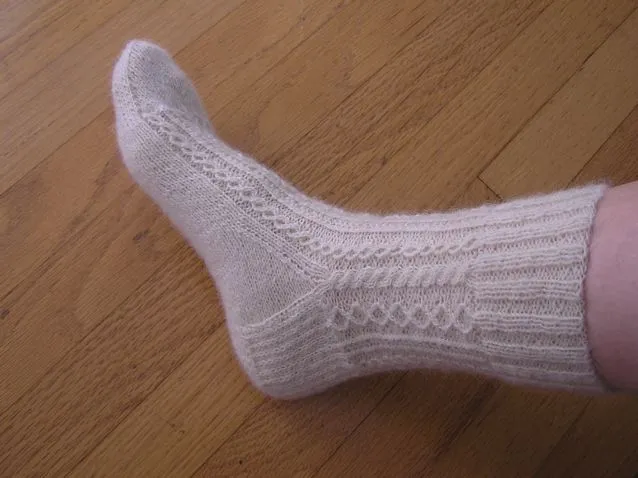
Photo: Loggie-log, Public domain, via Wikimedia Commons
Every winter I perform the same small ritual: dig through the sock drawer, find the one pair that still has elastic, and promise myself I will buy better socks in the spring. This year I actually did something about it. I ordered six pairs of wool-blend socks from Shetou — a township in central Taiwan that has been knitting socks for decades — and put them through a full season alongside the $48 outdoor-brand pair I have trusted for years.
The test was not scientific. It was a Midwest winter: commutes, dog walks, a few slushy school runs, and the kind of laundry schedule that treats the dryer as a personality trait. But it was long enough to answer the questions I actually care about: Are they warm? Do they shrink? Do the seams annoy me? And what does cost per wear look like when you stop babying a pair of socks?
Why a Small Taiwan Town Ended Up Making Socks
Shetou sits in Changhua County, about an hour south of Taichung. If you have ever wondered why so many 'Made in Taiwan' socks show up in Asian grocery shops and online marketplaces, the answer is partly geography and partly stubbornness. The area became a dense cluster of knitting mills, dye houses, and finishing shops, many of them family-run. When the sock industry moved offshore in the 1990s, Shetou kept a chunk of the know-how — and the machines.
That history matters when you are buying online. Taiwan's MIT mark is not just a flag sticker. The smiley-face logo usually comes with a certification number, a manufacturer name, and a fiber content panel. On socks, look for three things: a clear wool percentage, a flat toe seam, and a size chart that gives foot length in centimeters. If the listing says 'wool blend' but lists acrylic first, it will still be soft — it just will not be as warm when wet. The Shetou pairs I ordered were mostly 35 to 50 percent wool, with nylon and spandex for stretch. That is a reasonable winter blend for everyday wear, not a summit sock.
The Contenders and the Rules
The six Taiwan pairs averaged $18 each. They ranged from a thin crew to a cushioned boot sock, all from small Shetou-area brands selling through U.S. storefronts. The benchmark was a $48 merino-blend outdoor sock that has been my default for cold-weather hikes and winter dog walks. I rotated all seven pairs through 14 weeks of normal life: three office commutes a week, daily 30-minute dog walks, weekend errands, and two high-heat dryer cycles a month. I washed everything on warm and dried it on medium-high, because that is what actually happens in my house.
Warmth Without the Sweat
The $48 pair was the warmest, full stop. It has a denser knit and a thicker sole, and it held heat on a 19°F morning. The Taiwan blends were close enough on 25-to-35°F days, especially the two cushioned pairs. Where they beat the outdoor sock was indoors: the thinner Shetou crews did not turn my feet into a swamp at my desk. For commuters and dog walkers, that trade-off is worth noting. If you are standing still in single-digit weather, buy the heavier sock. If you are moving between a cold car, a warm office, and a muddy sidewalk, the Taiwan midweights are more flexible.
Fit, Seams, and the Toe Box
Fit was the biggest surprise. The Shetou pairs ran snug — not tight, but close to the size chart. If you are between sizes, size up. The $48 pair had a more forgiving fit and better arch support, which I noticed on longer walks. Four of the six Taiwan pairs had flat toe seams that disappeared inside my boots. Two had a slight ridge at the seam, noticeable for the first hour and then forgettable. The cuffs held up well; no pair slid down inside my boots during a walk.
Pilling and Shrinkage: Let the Dryer Decide
After ten washes, the $48 pair showed light pilling at the heel and nothing else. The Taiwan blends pilled more — mostly at the heel and under the ball of the foot — but not enough to feel bumpy through a shoe. One thinner pair shrank about half an inch in length after a high-heat cycle, which is a warning: if you love your dryer, treat the wool blends as low-heat or hang-dry. The cushioned pairs barely changed. The outdoor sock shrugged off the dryer like it was nothing, which is part of what $48 buys you.
The Cost-Per-Wear Math
Here is the unglamorous part. The $48 pair has about 150 wears on it and still looks new, so call it 32 cents per wear. A $18 Shetou pair that lasts 60 wears lands at 30 cents per wear. That is essentially a tie. The difference is that six $18 pairs cost $108, while one $48 pair costs $48. You are buying variety and a lower entry price, not a miracle. If you want one pair to last three winters, the outdoor sock is the safer bet. If you want a drawer full of decent winter socks without a $200 bill, Shetou is the smarter move.
What I Would Buy Again
I would reorder the cushioned Shetou crew and the thin commute sock. I would skip the thinnest pair for deep winter and save it for fall. The $48 outdoor sock stays for hikes and the coldest mornings. That is not a dramatic upset. It is just a better sock drawer — one where the elastic works, the seams stay put, and the cost per wear is close enough that you can stop treating socks like a single heroic purchase and start treating them like a small system.