Crispy by Default: What Five Taiwan Frozen Dumpling Bags Do in a Weeknight Air Fryer
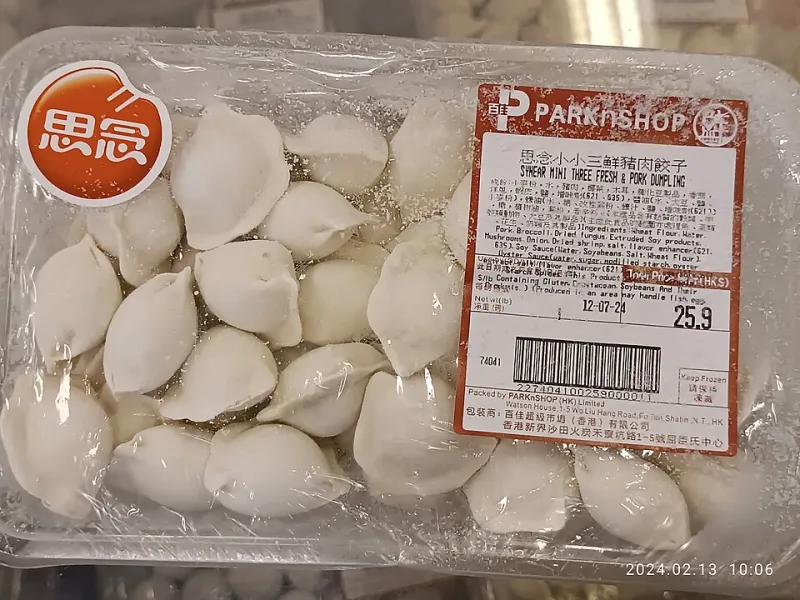
Photo: HAUMSHAHEM THEMRMZ, CC0, via Wikimedia Commons
Frozen dumplings have a reputation problem in my kitchen. They are supposed to be a backup plan, the bag you keep in the freezer for the night when nobody wants to cook. But most bags are built for steaming or pan-frying, not for the appliance that actually gets used on a Tuesday. So I cleared a shelf, bought five Taiwan-sourced bags available to U.S. shoppers, and ran them through a standard four-quart air fryer. No steamer basket, no splatter screen, no backup pizza. Just dumplings, a little oil, and the question every weeknight cook asks: is this actually better than ordering out?
The takeout comparison was a $30 order from a local dumpling shop: twelve pork-and-cabbage dumplings, a scallion pancake, and a small cold cucumber salad. That is a fair baseline for two people in the U.S. right now, and it is the number I kept in my head while weighing bags that cost between $8 and $16.
The test setup
I used the same method for every bag: 375°F, a light brush of neutral oil on the basket, dumplings in a single layer with space between them, and no thawing. I checked at seven minutes, flipped once, and pulled them when the edges looked lacquered rather than pale. A serving was eight dumplings, which is roughly what two people eat with a vegetable on the side. I judged four things: wrapper texture, filling, freezer burn, and cost per serving.
This is not a restaurant-style dumpling ranking. Air frying is a blunt instrument. It rewards thick skins, sturdy seams, and fillings that do not release a cup of water. A delicate dumpling can be wonderful steamed and still turn into a potato chip in the air fryer. That distinction matters if you are buying a bag for convenience rather than ceremony.
What the packaging tells you before you buy
The bag is not just branding. It is a preview of how the dumpling will behave. The first clue is the cooking-method panel. If it lists only steam and pan-fry, the manufacturer is telling you the wrapper is thin and the filling is wet. That does not mean it will fail in an air fryer, but it means you should expect cracks, leakage, or a leathery shell if you push the temperature.
Net weight versus piece count is the second clue. A 20-ounce bag with 30 dumplings is a different product from a 20-ounce bag with 20 dumplings. The first is smaller and often thinner-skinned. The second has more filling per piece and usually needs a lower temperature. I also look for ice glaze. A thin, even dusting of frost is normal. Thick ice chunks or a block of dumplings fused together suggests the bag has thawed and refrozen somewhere in the chain, and that shows up as cracked seams and dry filling.
Country of origin matters here, but not in the way people assume. Taiwan-produced frozen dumplings often have a tighter, springier wrapper than mainland Chinese brands because of the flour blend and the way they are par-frozen. That is a generalization, not a guarantee. The bag still has to earn it.
The five bags, ranked by weeknight utility
1. The $12 pork-and-cabbage bag (30 pieces). This was the winner. The wrappers had a slight translucence before cooking and a clean, dry surface. In the air fryer they puffed at the edges and developed a crisp bottom without turning hard. The filling was juicy but not soupy, with a clear cabbage sweetness and enough white pepper to taste like something. At 40 cents per dumpling, a serving of eight costs $3.20. That is less than a coffee, and it beat the takeout order on crispness. The bag listed air-fryer instructions, which is still rare enough to count as a signal.
2. The $8 mushroom-and-cabbage bag (30 pieces). The value pick. These were smaller and more delicate, and a few seams split in the basket. But the filling was earthy and well seasoned, and the crispy edges made up for the leaks. At about $2.13 per serving, it is the bag I would keep for solo lunches. It does not pretend to be a restaurant dumpling, and it does not need to.
3. The $9 chicken-and-corn bag (24 pieces). Sweet, mild, and kid-friendly. The wrapper was thicker than the pork bag and stayed intact, but the filling was a little loose and fell out after the first bite. At $3 per serving, it is a solid emergency bag. It just needs a dipping sauce with acid to wake it up.
4. The $14 shrimp-and-chive bag (20 pieces). The most expensive per serving at $5.60, and the most fragile. The shrimp flavor was clean and the chive was bright, but the air fryer dried the wrapper before the filling was fully hot. These are excellent steamed. In an air fryer, they are a reminder that not every dumpling wants to be crispy.
5. The $16 beef-and-onion bag (20 pieces). Rich, heavy, and greasy in a way that overwhelmed the wrapper. The filling tasted good, but the fat rendered out and pooled in the basket, leaving the bottoms soggy and the tops tough. At $6.40 per serving, it was the only bag that made me wish I had ordered takeout instead.
The takeout math
The $30 order worked out to roughly $15 per person before tip, and it came with a scallion pancake and a salad. The $12 bag worked out to $3.20 per serving, and I still had dumplings left for another dinner. That is not a fair fight on variety, and I am not arguing that a freezer bag replaces a good dumpling shop. But on a Tuesday, when the choice is between a 25-minute delivery wait and a 10-minute air-fryer cycle, the $12 bag is the more useful object. It was crisp, consistent, and cheap enough that I did not resent the cleanup.
Air-fryer notes that actually help
Do not thaw the dumplings. A frozen dumpling holds its shape while the wrapper sets. A thawed one slumps and leaks. Preheat the basket for two minutes, brush it lightly, and leave space. Crowding steams the dumplings, which defeats the point. Check at seven minutes, because air fryers run hot and inconsistent. And keep a sauce ready: soy, black vinegar, chili oil, a little sugar. The sauce covers a lot of small sins.
The bigger lesson is about expectations. Air frying is not steaming. It will not give you the soft, translucent wrapper of a dim sum basket. It gives you a crisp shell and a hot filling, and that is enough for a weeknight. The $12 bag understood that. The $16 bag did not.
The bag I would buy again
The $12 pork-and-cabbage bag is the one I would restock. It had the best balance of wrapper strength, filling flavor, and cost per serving, and it did not require a special technique. The $8 mushroom bag is the budget backup. The shrimp and beef bags are for people who already know they will steam them. That is the honest weeknight verdict: the best frozen dumpling is not the most expensive one. It is the one that survives the appliance you actually turn on.