Small Pot, Big Thursday: A $19 Taiwan Rice Cooker Auditions for Thanksgiving
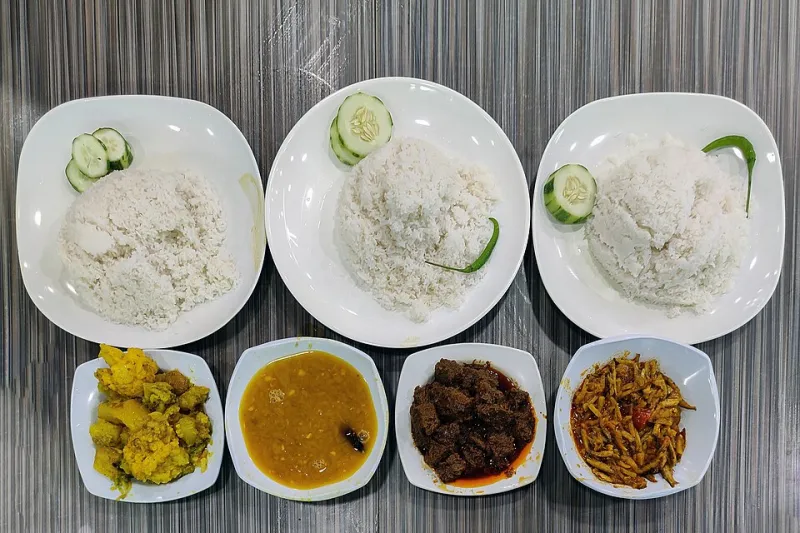
Photo: Moheen Reeyad, CC BY-SA 4.0, via Wikimedia Commons
Thanksgiving week is a bad time to learn an appliance's limits. That is exactly why I unpacked a $19 Taiwan-style rice cooker on the Sunday before Thanksgiving 2026 and parked it next to the 6-quart Instant Pot that already lives on my counter. The plan was not to crown a winner. It was to see whether a cheap, single-purpose cooker could carry real weight during the busiest cooking week of the American year — rice for a crowd, sticky-rice stuffing, congee breakfasts, and a little countertop steaming — without becoming another gadget I have to store.
The cooker is the small, rounded, indirect-heat type many Americans know from Tatung. Mine is a generic Taiwan-market model with a 3-cup uncooked capacity, a steamer insert, and a keep-warm switch. It landed at $19 before shipping; after shipping it was closer to $27. That is still less than half the price of the Instant Pot I bought years ago. But price is not the test. Thanksgiving is.
What This Little Cooker Is — and Is Not
This is not a pressure cooker, and it is not a multi-cooker. There is no saute function, no sealing lid, no yogurt setting, no app. You put water in the outer pot, rice and water in the inner pot, press down a switch, and wait. When the water in the outer pot boils off, the temperature rises, the switch flips, and the cooker drops into keep-warm. That is the whole machine.
What it does well is direct: white rice, sticky rice, congee, and steaming. What it does not do is brown meat, pressure-cook beans, or make a one-pot meal without a second pan. The Instant Pot is the opposite: bigger, heavier, more capable, and more annoying to clean when you have used it for three different things before noon.
That difference mattered more than any spec sheet during Thanksgiving week.
The Capacity Math
My cooker takes 3 cups of uncooked rice, which yields roughly 6 cups cooked. For a Thanksgiving table with 10 to 12 people and a lot of other sides, that is one solid batch, maybe two if rice is the main starch. The Instant Pot's 6-quart pot can handle more rice at once, but it is also the pot I needed for mashed potatoes, stock, and a last-minute bean dish.
So the little cooker did not win on capacity. It won on scheduling. I cooked the first batch of rice at 2:30, moved it to keep-warm, and started the second batch at 3:15. By the time the turkey rested, both batches were hot and the Instant Pot was free. A 70-minute two-batch rice plan sounds inefficient until you realize the alternative was waiting for the big pot to open up.
Wednesday: Sticky-Rice Stuffing
This was the cooker's best performance. I soaked glutinous rice for four hours, drained it, and cooked it with a little less water than usual so the grains stayed separate but tacky. Then I folded in browned sausage, shiitake mushrooms, soy sauce, scallion, and a splash of rice wine. The small pot heated evenly and did not scorch the bottom, which is more than I can say for some stovetop attempts I have made.
The Instant Pot can cook sticky rice, but the 6-quart insert feels absurd for a 2-cup batch. The little cooker's size was an advantage: less headspace, less cleanup, and a keep-warm function that held the stuffing at serving temperature while the oven did its thing.
Thursday: Rice for a Crowd
Thanksgiving rice is not glamorous. It is insurance. You need enough of it, you need it hot, and you need it not to compete with the turkey for oven space. The $19 cooker handled that job quietly. The first batch was plain jasmine rice. The second batch got a little butter and chopped parsley at the end. Both sat on keep-warm for about an hour without drying out or crusting.
The Instant Pot would have done the same job, but it would have been occupied. That is the real argument for a cheap second cooker: not superiority, but redundancy. On Thanksgiving, redundancy is a side dish.
Friday: Congee and the Cleanup Ledger
Friday morning I made congee with half a cup of rice and five cups of water. I set it before coffee and let it run. By the time the leftovers were packed, it had turned soft and creamy. A little salt, scallion, and chili oil made it a better breakfast than anything I would have ordered out.
Cleanup is where the little cooker keeps winning. The nonstick inner pot rinses clean in under a minute. The lid and steam vent take another minute. The outer pot gets a wipe. There is no sealing ring to scrub, no heavy stainless insert to wrestle into the sink, and no lingering smell of last night's chili in tomorrow's rice. The Instant Pot is not hard to clean, exactly, but it is a commitment. The little cooker is a favor.
Voltage, Plugs, and the Boring Safety Stuff
Here is the good news for US buyers: Taiwan runs on 110 volts and 60 hertz, the same as the United States, and its common plugs are Type A and Type B. So a Taiwan-market rice cooker generally plugs into a US wall outlet without a converter. Check the label anyway. If the listing says 220V, skip it unless you plan to use a proper step-down transformer, which costs more than the cooker.
The boring part matters. Cheap imported appliances do not always carry UL or ETL certification. Use the cooker on a countertop near a wall outlet, not on a long extension cord. Do not leave it running unattended for hours. The cord on mine is short, which is annoying but also a reminder that it is not designed to be a background appliance all day. Wattage is low — around 400 watts — so it will not trip a circuit the way a pressure cooker can.
The Verdict: Understudy, Not Headliner
The $19 Taiwan-style rice cooker did not beat my Instant Pot. It is not supposed to. It cannot pressure-cook, saute, or make a pot of chili. But during Thanksgiving week, it did something the Instant Pot could not: it stayed out of the way while still producing useful food. It cooked sticky rice for stuffing, held two batches of crowd rice, made Friday congee, and steamed green beans on Saturday without anyone thinking about it.
If you already own an Instant Pot and you cook rice, sticky rice, or congee more than once a month, a small Taiwan-style cooker is a sensible $19 to $30 addition. It is not a replacement. It is an understudy that shows up on time. For US buyers ordering from Taiwan, factor shipping and returns into the price, and confirm the voltage before you hit buy. That is the iShop Taiwan calculation: a small, specific tool that solves a narrow problem, shipped to your door, for less than the cost of a turkey.
Mine is staying on the counter. The Instant Pot can keep the big jobs. The little cooker has Thanksgiving week on its resume now.