No Outlet, No Hum: A $14 Taiwan Hot-Water Bottle vs. My Electric Heating Pad for One Cold Month
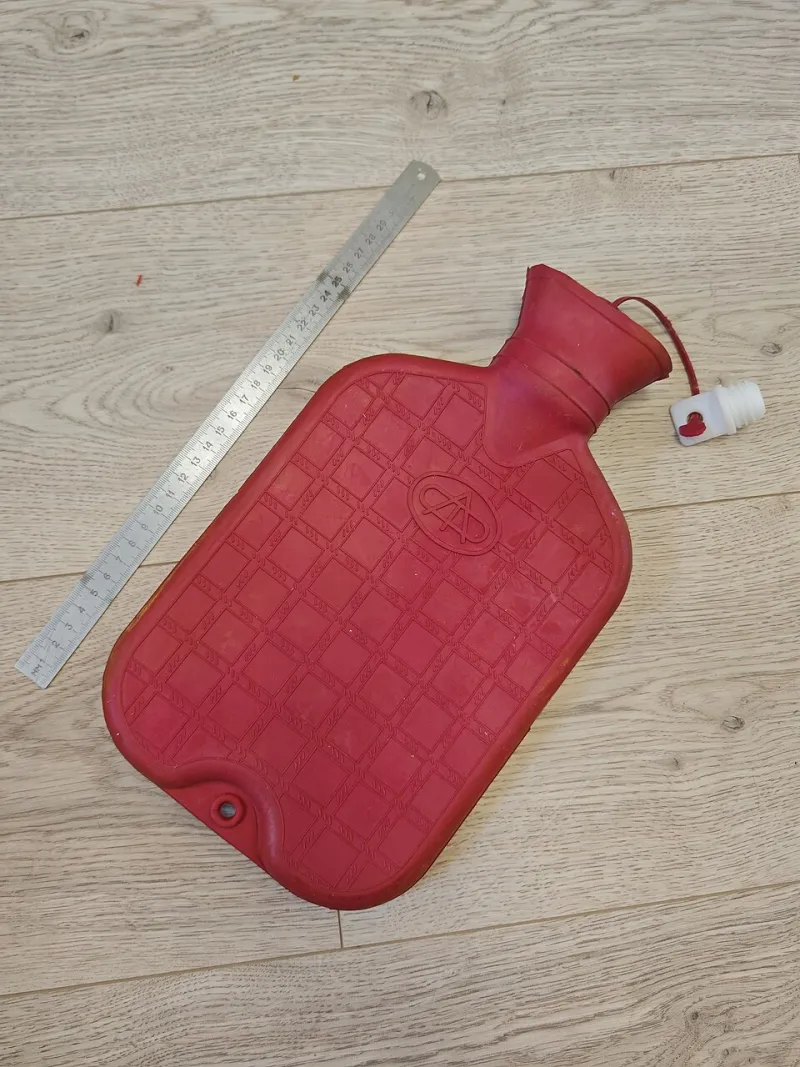
Photo: Александр Сигачёв, CC0, via Wikimedia Commons
The first cold snap of the 2026 season hit my bedroom harder than the forecast suggested. The electric heating pad came out of the closet, the flannel sheets went on, and I started wondering whether a $14 rubber hot-water bottle from Taiwan could do the same job without a cord, a controller, or the faint electrical hum that makes me feel like I am sleeping inside a small appliance.
So I ran a month-long test. One side of the bed got the heating pad. The other got the hot-water bottle. Same room, same sheets, same questionable window insulation. I logged bedtime warmth, middle-of-the-night comfort, morning temperature, and the small annoyances that only show up after week two.
The setup: one bottle, one pad, four weeks
The bottle was a classic Taiwan-made rubber model, roughly two liters, sold with a knit cover for about $14. The heating pad was a standard US drugstore model, about 12 by 15 inches, with three heat settings and a two-hour auto-off. Nothing fancy on either side.
I filled the bottle from a stovetop kettle, using hot tap water plus a splash of boiled water to get it into the right range. Not boiling. The rubber smelled faintly of new tires for the first few days, then settled down. The cover was a soft acrylic knit, which is not the most breathable material in the world, but it kept the surface from feeling too hot against my feet.
The heating pad went under the fitted sheet on the other side, per the instructions. I set it to medium, let it run for 20 minutes before bed, and then let the auto-off do its thing. That is roughly how most people use one, and it kept the comparison honest.
What actually matters in the rubber, the cover, and the stopper
Before the test, I spent some time looking at what separates a decent hot-water bottle from a regrettable one. The rubber should feel thick and slightly matte, not slick or thin like a pool toy. Seams should be even, with no rough edges or visible gaps. A strong rubber smell that never fades is a bad sign. So is a bottle that feels stiff when empty, because it will crack sooner.
The cover matters more than I expected. A good one is thick enough to prevent contact burns but not so bulky that the heat never reaches you. Look for a washable cover with a secure closure. The cheap ones slide off in the night and end up bunched at the foot of the bed.
The stopper is the safety-critical part. Mine had a brass insert and a rubber washer, which felt more substantial than the all-plastic stoppers on some budget bottles. It threaded smoothly and sealed without a drip. If the stopper feels loose, cross-threads, or the washer looks cracked, stop using it. That is not a place to improvise.
Heat duration: where the bottle runs away with it
This was not close. The heating pad was warmer for the first hour, no question. It has that concentrated, dry heat that feels great when you first get into bed. But after its two-hour auto-off, it cooled quickly. By 3 a.m., the pad side was neutral. By 5 a.m., it was slightly cool to the touch.
The hot-water bottle was slower to warm the sheets, but it kept giving off heat for six to seven hours. At 6 a.m., it was still lukewarm, and the area around my feet was noticeably warmer than the rest of the bed. That residual warmth is the whole point. It is not a blast of heat; it is a low, steady presence.
I used a cheap infrared thermometer to spot-check the surface temperature through the cover. The bottle started around 125°F at the surface and dropped gradually. The heating pad peaked higher on its surface but fell off a cliff after the auto-off. If you want all-night warmth without waking up to adjust anything, the bottle wins.
Safety: cords versus scalding water
Neither option is risk-free. Electric heating pads can cause burns if you lie on them, fold them, or use them with certain medications that reduce skin sensitivity. The auto-off is a good feature, but it also means the pad is not really a full-night solution. Check for a UL mark and follow the instructions about not bunching or folding the pad.
Hot-water bottles have their own rules. Do not fill them with boiling water. Use hot water, not water that is actively rolling in the kettle. Fill about two-thirds full, then squeeze out the excess air before tightening the stopper. That gives the water room to move and reduces stress on the seams. Always use a cover. Never sit or lie directly on the bottle, and replace it every couple of years, or sooner if the rubber feels stiff or cracked.
In four weeks, the bottle did not leak. The stopper stayed dry. The cover did its job. I did have one close call when I overfilled it and the rubber felt tight, so I dumped some water and started again. That is a normal part of learning the routine.
Energy use: a kettle versus a pad
A two-liter kettle run for a few minutes uses a small amount of electricity. My electric heating pad, on medium, draws somewhere in the range of 60 to 100 watts. Two hours of that is not a huge bill, but it is not nothing either. Over a month, the hot-water bottle used less energy, mostly because it does not run for hours. It is also silent, which matters if you are a light sleeper.
I am not going to pretend this is a life-changing savings. It is a few dollars a month at most. But the bottle also does not need an outlet near the bed, which is a real convenience if your bedroom is short on plugs or you do not want a cord in the dark.
Bedtime convenience: the routine matters
Filling a hot-water bottle takes about 90 seconds. You boil water, fill, squeeze, seal, and tuck. The heating pad takes about 20 seconds to plug in and turn on, but then you have to remember to turn it off, or trust the auto-off. The bottle has no controller to lose under the bed and no beeping buttons.
The trade-off is that the bottle is a ritual. You have to be willing to do it every night. On the nights I was already tired and cold, the pad was easier. On the nights I actually did the routine, the bottle was better. By week three, I was filling the bottle before I brushed my teeth, and it had become part of the wind-down rather than a chore.
Morning comfort and the final verdict
The bottle side of the bed was consistently more comfortable at 6 a.m. The pad side felt like a normal bed that had once been warm. The bottle side felt like a bed that was still holding onto the idea of heat. That is a small thing, but it is the difference between waking up and immediately wanting coffee and waking up and wanting to stay put for ten more minutes.
If you want instant, controllable heat and you do not mind the cord, the electric pad is fine. If you want warmth that lasts through the night and you are willing to spend 90 seconds with a kettle, the $14 Taiwan hot-water bottle is the better cold-bedroom tool. Buy a thick rubber one, check the stopper, use the cover, and do not fill it with boiling water. That is the whole guide. The rest is just a month of good sleep.